Fruits And Health Benefits

Mukesh Kumar
| 01-11-2026
 · Food Team
A glass of juice or a fresh piece of fruit seems harmless, but a few well-known fruits can change the way certain medicines work in the body.
That matters more than many people realize. Some reactions can raise medicine levels too much, while others can make treatment less effective.
Grapefruit is the best-known example, yet it is not the only one people should keep in mind. If you take regular medicine, especially for an ongoing health condition, it is worth paying attention to food labels, juice blends, and even marmalade.

Why grapefruit matters
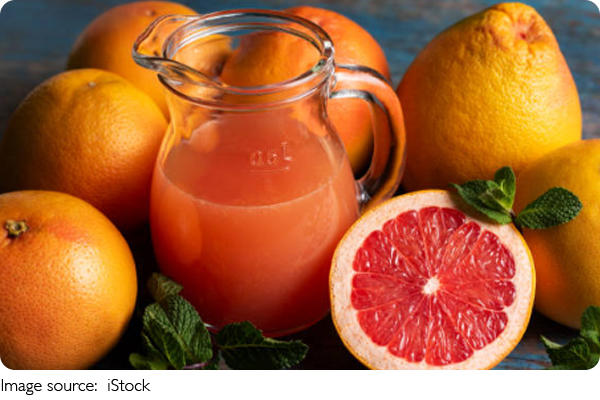
Grapefruit can affect how some medicines are absorbed or broken down. In simple terms, compounds in grapefruit can interfere with normal processing in the gut, which may lead to more of the medicine entering the bloodstream than intended. When that happens, side effects may become more likely.
For some medicines, the opposite can happen and the treatment may not work as expected. Professor David Bailey, a clinical pharmacologist at Western University's Schulich School of Medicine and Dentistry, found in a study of healthy volunteers that grapefruit, orange and apple juices can reduce the absorption of certain drugs, such as the allergy medicine fexofenadine.
That reduced absorption could cancel out the medicine's benefits. Bailey's team believes compounds in these juices block a transporter that helps carry such drugs from the gut into the body.
Medicines commonly affected
The list of medicines that may react with grapefruit is broad, which is one reason this issue is easy to overlook. It can affect some statins used for cholesterol, certain medicines for high blood pressure, some treatments for heart rhythm problems, and a range of other prescription products.
Not every medicine in a category is affected, so it is not useful to guess based on the condition being treated. What matters is the exact medicine. Patient information leaflets often mention grapefruit if it is relevant, and pharmacists can usually confirm it quickly.
It is not just fresh fruit
One detail people often miss is that the reaction is not always tied to eating a whole grapefruit. Grapefruit juice can have the same effect, and even a small amount may be enough for some medicines. Mixed fruit drinks can also be an issue if grapefruit is included.
Marmalade and other citrus-based products may deserve a second look too, depending on the ingredients. If you have been told to avoid grapefruit, read the ingredient list on juices, blends and preserves before buying them.
Other fruits that may cause similar issues
Seville oranges are also known to interact with some medicines in a similar way to grapefruit. These oranges are often used in marmalade rather than eaten as everyday fruit, so the source can be easy to miss. Pomelos may also cause similar concerns.
This is why advice about grapefruit sometimes extends to certain related citrus fruits as well. If your medicine leaflet mentions avoiding grapefruit, ask whether Seville oranges or pomelos should also be avoided.
What to do if you take regular medicine
The safest approach is not to make assumptions. Check the leaflet that comes with your medicine and look for any food or drink warnings. If grapefruit or related fruits are listed, follow that advice closely. If the leaflet is unclear, ask a pharmacist or your prescribing clinician before making changes.
It is also helpful to mention your usual diet, including juices and citrus products, when discussing treatment. That small conversation can prevent problems and help your medicine work properly.
Fruit itself is not the problem; the risk comes from specific fruits meeting specific medicines. A good time to check again is whenever a new medicine is added or a dose changes, since a fruit that was fine with one prescription may not be with the next.