Anime Changed Digital Art
Caroll Alvarado
| 20-07-2026
 · Anime Team
Modern digital art did not simply borrow a few anime features and move on. It absorbed an entire way of thinking about image-making.
Over time, anime helped push digital artists toward cleaner silhouettes, stronger emotional expressions, cinematic color, layered backgrounds, and motion-driven composition.
What once looked like a niche visual influence now feels woven into mainstream online illustration, concept art, graphic design, and animation marketing. The transformation matters because anime did not just change appearances. It changed how many artists build feeling, rhythm, and readability into digital images.
Visual Shift
One major change is clarity. Anime-trained visual language tends to organize the frame so the viewer understands it quickly. Shapes are cleaner, poses read faster, and emotional intent arrives earlier. This has influenced modern digital art across platforms where images are often seen first on small screens.
Strong silhouettes, directional lines, and simplified value structures help art remain legible whether it appears in a portfolio post, storefront banner, or phone feed.
Emotion First
Digital illustration increasingly favors faces and gestures that communicate feeling at a glance, and anime helped normalize that priority. Eyes, mouth shape, head angle, and body posture are often treated not as small finishing details, but as central storytelling tools.
This approach works well in fast-moving digital spaces because emotion becomes immediately readable. Instead of requiring long visual study, the image can connect with viewers in seconds while still rewarding closer attention.
Color Drama
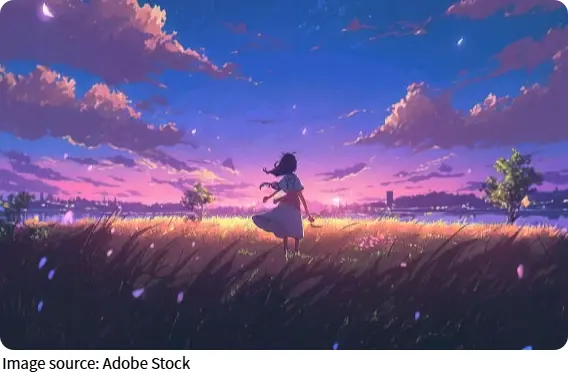
Another important shift appears in color handling. Anime has long used color not only for decoration, but for atmosphere and emotional timing. Modern digital artists now rely heavily on controlled palettes, soft gradients, glowing night tones, sunset warmth, and contrast between cool environments and warm focal lights.
This influence is visible far beyond animation fandom. It appears in poster design, social media illustrations, music visuals, and stylized promotional art where mood must be established quickly.
Scene Cinematics
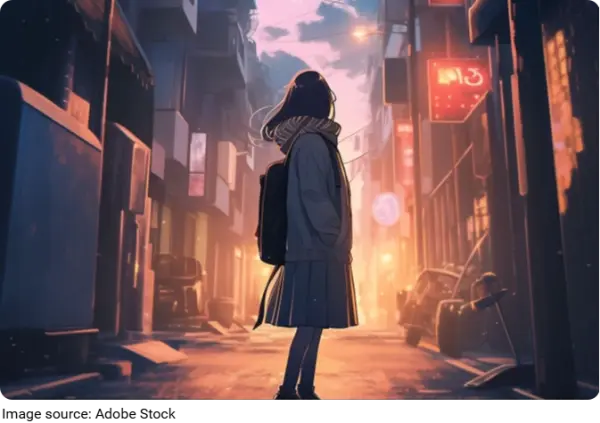
Framing has changed as well. Many contemporary digital works use anime-like composition to create a cinematic feel even in still images. Wide skies, off-center characters, dramatic perspective, foreground framing, and layered depth make an illustration feel like part of a larger scene rather than a single isolated drawing.
This has been especially influential in digital storytelling spaces where artists want one frame to imply a full world, not just a subject placed against a backdrop.
Hybrid Craft
Digital tools did not erase anime aesthetics; they expanded them. Research on digital-era anime has shown that newer production methods often add to older visual habits instead of replacing them outright. That same pattern appears in modern digital art.
Artists now combine crisp linework, painterly brushes, textured overlays, photo references, 3D staging, and compositing effects while still preserving an anime-rooted sense of flatness, graphic strength, and expressive design. The result is hybrid art that feels polished but still handmade.
Platform Culture
Online art culture accelerated this transformation. Tutorials, fan communities, short-form process videos, and shared brush packs made anime-influenced methods easier to study and remix. Younger artists often learned anatomy, color, and composition through anime-adjacent workflows before entering broader digital illustration spaces. As those artists moved into freelance work, game art, merchandise design, and publishing, the style vocabulary traveled with them.
Global Reach
Museums, contemporary art writing, and academic studies have also treated manga and anime as serious visual forces rather than disposable trends. That wider recognition helped anime-derived aesthetics move more confidently into global art conversations.
Today, digital artists from many regions blend anime logic with street art, fantasy painting, editorial illustration, and graphic design. The result is not one uniform style. It is a shared visual grammar built from readability, stylization, and emotional intensity.
Design Legacy
Character design is one of the clearest examples of anime's long-term effect. Contemporary digital characters often rely on purposeful hair shapes, expressive eyes, costume logic, and pose-driven personality in ways strongly aligned with anime design principles. Even artists who do not label their work as anime-inspired may still use this structure because it is effective.
The influence now functions less like a direct imitation and more like a design standard that has quietly become common practice.
Beyond Trend
The most important point is that anime's effect on digital art is no longer just a passing aesthetic wave. It changed expectations. Viewers now expect illustration to be emotionally clear, visually dynamic, and instantly recognizable in crowded digital environments. Artists are expected to control mood, color, and gesture with precision.
Anime helped make those expectations feel natural. Its influence endures because it offered a visual system that fits the speed, flexibility, and emotional demands of modern digital media.
Anime transformed modern digital art styles by reshaping how artists think about clarity, emotion, color, composition, and hybrid technique. Its influence can be seen in character design, cinematic framing, online illustration culture, and the wider acceptance of stylized visual storytelling as serious contemporary craft. What changed was not only the surface look of digital art, but the structure beneath it.
Many of today's strongest images are built with lessons anime helped popularize. When looking at current digital illustration, where do you notice that influence most clearly: in the faces, the color, the framing, or the atmosphere?