Fascinating Kelp Gulls

Caroll Alvarado
| 17-03-2026
 · Animal Team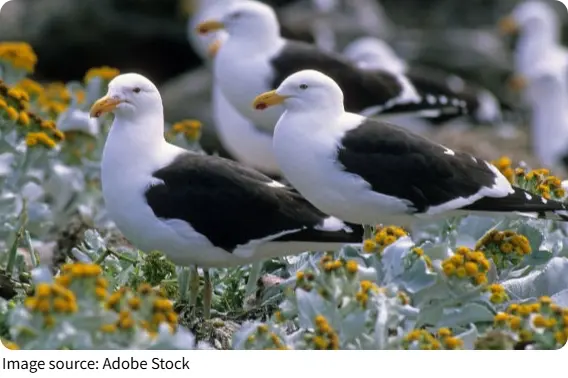
On a windswept shoreline, a flock of gulls hovers above the surf.
One dives with precision, another struts confidently along the rocks, scavenging for scraps.
Among them, the Kelp Gull stands out—not for flamboyant colors, but for intelligence, adaptability, and surprising behaviors that often go unnoticed by casual observers. These birds are more than opportunistic scavengers; they are skilled problem-solvers and social navigators of the coastal environment. Understanding the life of Kelp Gulls helps reveal how even familiar creatures can surprise us with complexity.
Adaptive Feeding Strategies
Kelp Gulls have developed remarkable versatility in finding food, allowing them to thrive in varied coastal habitats.
1. Scavenging and opportunism
They are not picky eaters. Kelp Gulls feed on fish, invertebrates, and human refuse. On busy harbors, they have been observed waiting for fishing boats to discard unwanted catch, demonstrating a keen understanding of human activity patterns.
2. Tool-like problem solving
In some regions, Kelp Gulls have learned to drop shellfish onto rocks to break them open. This behavior shows planning, observation, and precise execution, traits often associated with larger-brained birds like crows or ravens.
3. Following seasonal abundance
During breeding seasons, they can shift diets toward higher-protein prey, such as other seabird eggs or chicks. They adjust feeding locations and techniques depending on availability, highlighting ecological flexibility.
Their ability to exploit both natural and human-provided food sources underscores the species' survival skills in dynamic coastal environments.
Social Structure and Communication
Kelp Gulls are highly social, using vocalizations, postures, and coordinated behaviors to navigate complex interactions.
1. Colony living
Breeding colonies can number in the hundreds. Within these communities, individuals recognize neighbors and rivals, establishing hierarchies that minimize direct conflict and ensure access to nesting sites.
2. Alarm and warning calls
Adults emit sharp calls to alert others of predators or human disturbance. These signals can trigger group responses, from mobbing threats to synchronized flight maneuvers, demonstrating coordinated social awareness.
3. Display behaviors
Mating rituals include head tossing, wing flicking, and ritualized feeding. These displays communicate health, status, and compatibility, supporting reproductive success in densely populated colonies.
Social intelligence allows Kelp Gulls to maintain both cooperation and competition effectively, striking a delicate balance in large groups.
Adaptation to Human-Altered Environments
While some seabirds struggle with human encroachment, Kelp Gulls often flourish in proximity to people.
1. Urban and industrial habitats
They are regular visitors to cities, harbors, and landfills. Their capacity to exploit discarded food has expanded their range and population density in many coastal regions.
2. Nesting flexibility
Kelp Gulls nest on natural cliffs, islands, and increasingly on man-made structures such as rooftops and piers. This flexibility reduces predation risk and allows access to new food sources.
3. Interaction with other species
They may displace less aggressive seabirds or feed opportunistically on the eggs and chicks of other species. While controversial ecologically, this behavior shows how adaptable Kelp Gulls can be in exploiting available niches.
Their resilience highlights an important lesson in wildlife adaptability: intelligence and opportunism can often outweigh size or speed when navigating changing environments.
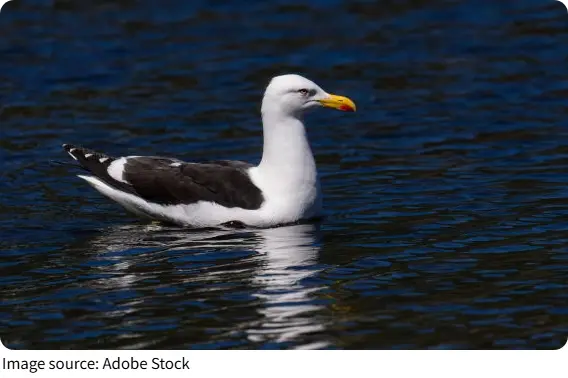
Observing Kelp Gulls closely reveals a world of strategy, learning, and social negotiation that belies their ordinary appearance. They are survivors, innovators, and highly perceptive participants in their coastal ecosystems. The next time you notice a group circling above the waves, take a moment to watch carefully. Their behavior is not random; it is an intricate dance shaped by instinct, intelligence, and opportunity. In their simple black-and-white plumage, Kelp Gulls carry stories of adaptability and subtle brilliance, reminding us that even familiar wildlife has extraordinary facets waiting to be discovered.